BRINGING EMPATHY TO TECHNOLOGICAL INTERACTION
Hi is the most basic verbal communication. Hi draws attention. It announces one’s presence, and acknowledges the other person’s presence. Hi is a sign of respect. It is social engagement. One person initiates that engagement, the other receives it. It is the start of a conversation. The quality of that conversation will depend on a number of principles.
Learn more about my work at jan.decoster.studio
MANIFESTO : FOUR RULES FOR HUMAN-ROBOT INTERACTION
If we want to prepare for a society with robots in our daily lives, then we need to think about clear communication and cognitive empathy towards robots. This requires careful consideration of the design and behavior of our robots. For the Humanoid Initiative I created the following rules for human-robot communication. These rules fit perfectly with the the four laws of robotics (created by Isaac Asimov) from which they were derived.
- THE HUMAN NEEDS TO BE SAFE
People need to be safe, not only physically, but also mentally.
We can ask these questions:
Do people feel comfortable with the design and behavior?
Do they understand what’s going on with the robot, what its intentions are?
Is the robot designed in a way so people feel emotionally at ease in its presence?
Does communication and movement evoke trust in its operation? Is it consistent?
Is the robot responding appropriately to normal social behavior? - THE ROBOT NEEDS TO UNDERSTAND
The robot needs to be able to understand complex human interactions, not only verbally, but also body language, behavior and indirect input.
Can the robot figure out what the intent of the human is, in any kind of language they are using?
What is the emotional state of the human?
Does that reflect on the intent of certain commands?
Are those commands not in conflict with the first rule? - THE ROBOT NEEDS TO BE SAFE
While in operation, the robot needs to be safe to do so, as long as there is no conflict with the first and second rule.
Is the robot communicating its intentions, in a way so that it’s safe from harm from humans and other robots in its environment?
Is movement anticipated, and is the path of the robot clearly communicated to others? - HUMAN CULTURE AND VALUES NEED TO BE RESPECTED
Robots are part of our world, and they are created by humans. Therefore they should also reflect our culture and our moral values.
Is the role and design of the robot in accordance with our ethics.
Does the robot understand humanity, and our values? Is the robot operating with respect to these values?
Can it help preserve our culture, when operating in environments far from human inputs, like in space exploration?
Will it be able to preserve our culture far into the future?



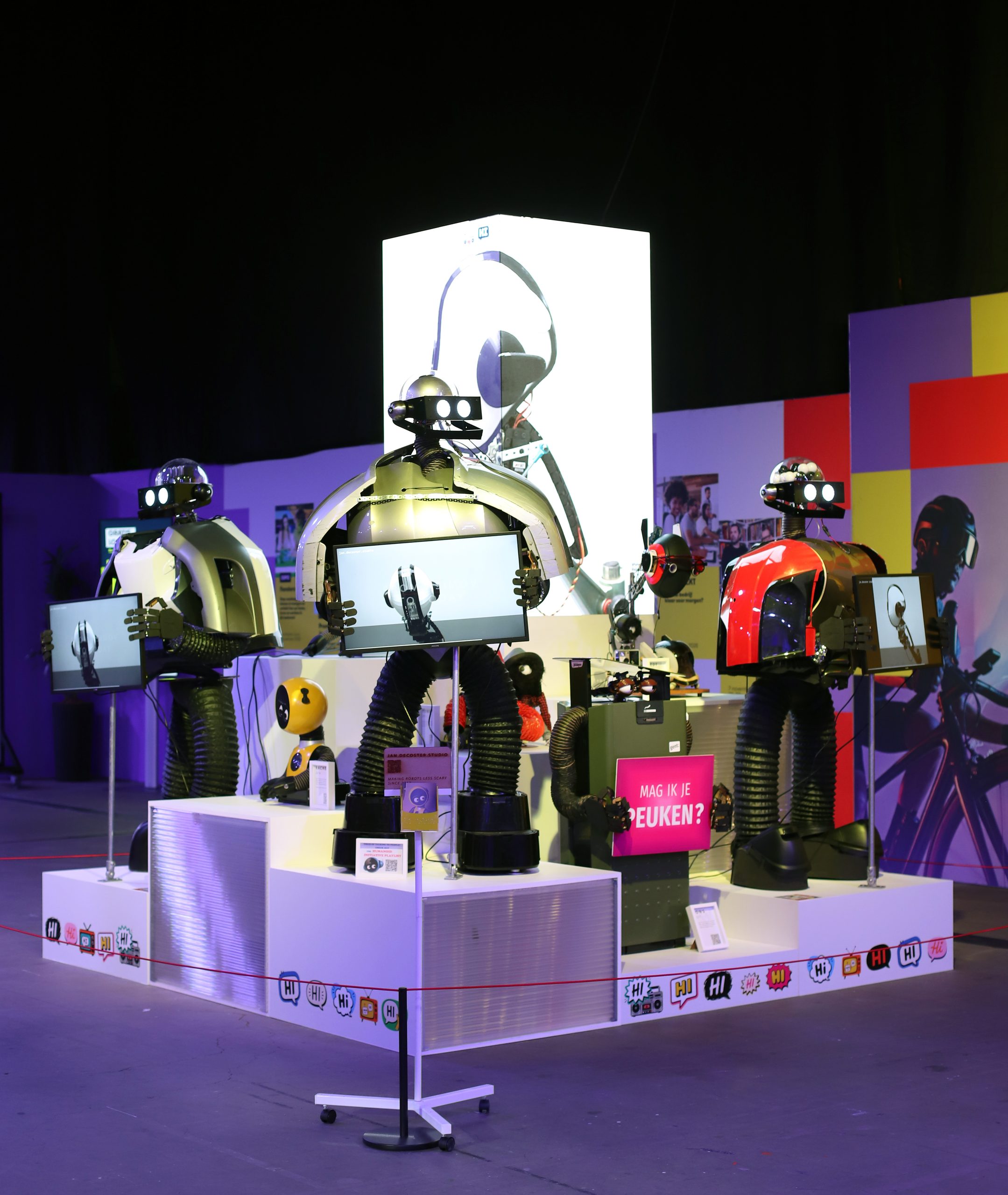
THE HUMANOID INITIATIVE EXHIBITIONS
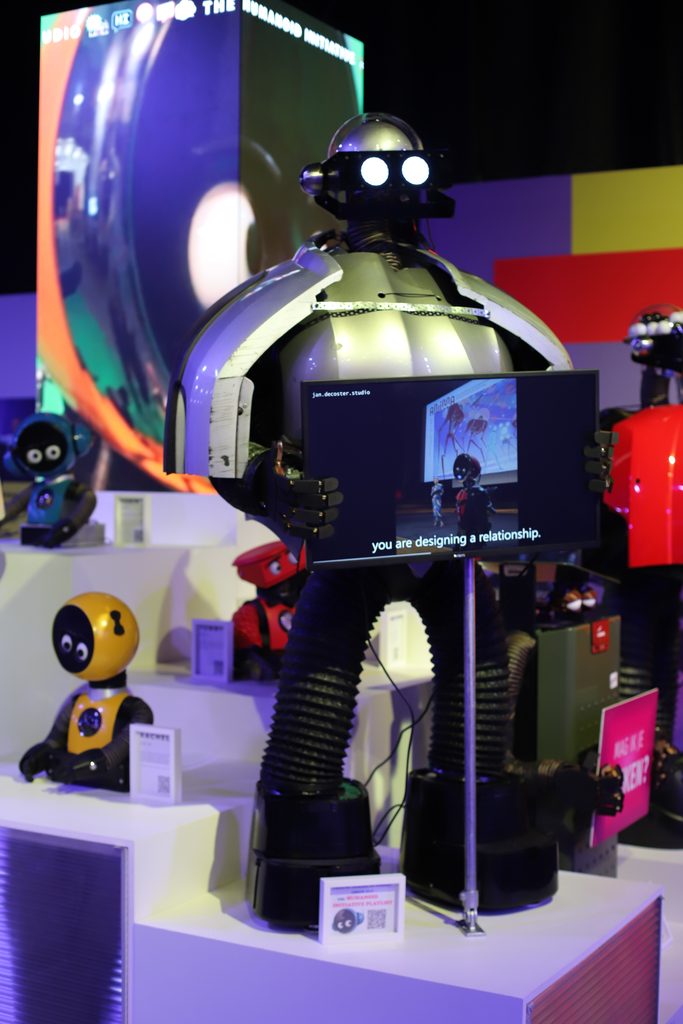
Jan De Coster has 15 years of experience in humanoid robot design and public exhibitions to demonstrate robot technology.
The impact of tech demos highly depends on the medium. A powerpoint slide only goes that far. Meeting a robot in real life makes all the difference.
Our feeds are filled with AI generated videos of humanoid robots. The best remedy against AI-slop is stepping away from your screen, and getting into the real world. That is exactly what happened during the Flanders Technology and Innovation festival in the fall of 2026.
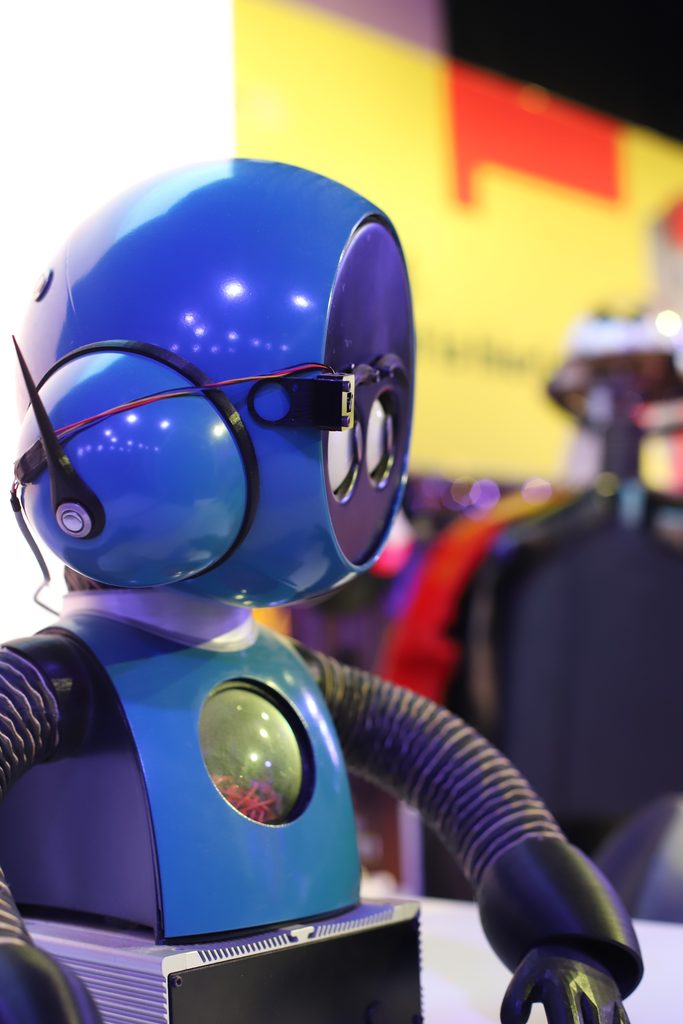
The Humanoid Initiative was demonstrated in an exhibit at the Nekkerhal in Mechelen.